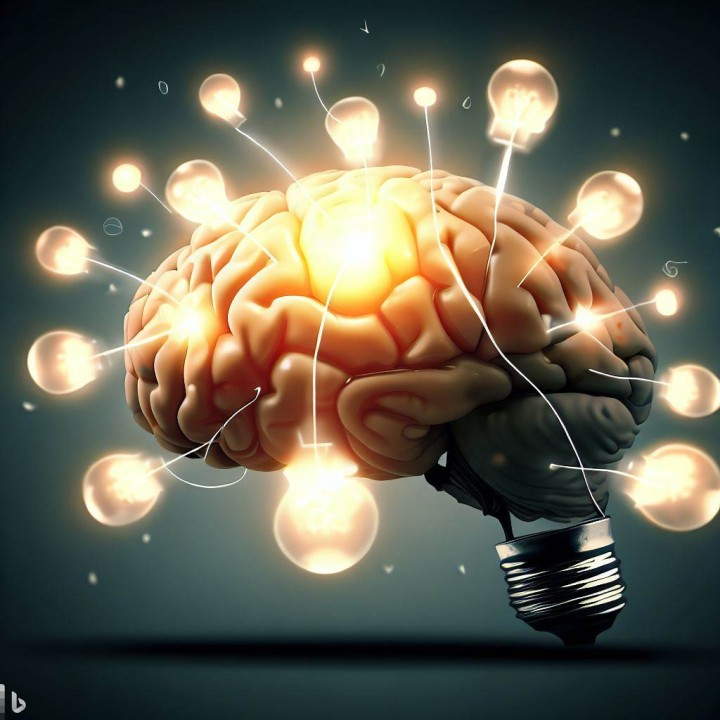
On Thursday, I saw a preview of Microsoft Copilot — a tool that will bring ChatGPT-like options to your Word and Excel documents and your email and meetings. The power to generate content and ideas will be at our fingertips, resulting in an avalanche of information. It made me pause and consider: what happens when anyone and everyone can and will ask ChatGPT to generate 20 ideas to solve a problem — including accurate insights from their own minds and objective data from their work? And how do we respond to this abundance of ideas?
A Penny for AI's Thoughts
I started to realize that in a world where ideas aren't just a dime a dozen but a penny a million, having a great idea may not get you very far. Sure, with the pace of today's technology we will transform an idea into a website or an app in record speed. But what we end up with is merely a website—a lifeless bit of code without usage nor users nor anything else that propelled us to create it in the first place. It becomes clear that we need more than just a good idea: we'll need a strategic plan. But since ChatGPT rattle off 20 plans for you, the real challenge lies in selecting one plan from the many — and successfully implementing it.
Picking a plan — and agreeing on it is already a challenge every day in healthcare. Two smart, experienced, caring, dedicated people will look at the same problem, both agreeing on the same goal, and still have very different ideas on how to solve it.
-
Does the nurse draw the blood or the phlebotomist?
-
Does the patient call for an appointment or does the staff call them?
-
Does the psychiatrist refill the anti-depressant or the primary care doctor?
-
Do we admit the Alzheimer's patient to the hospital because we can't find a safe for them, or do we keep them in the ER until we can?
Or sometimes making things better for one specialty or team makes it worse for the other one. Both parties have reasonable arguments. Lines get drawn. Policies and procedures getting trotted out. If you're lucky, the idea or problem you're trying to solve is within your own department — an area in which you have some control — and can often come to agreement. But when it's across departments, or between different hospitals? Often no decision even gets made.
Now, imagine the impact of generative AI tools like Bard, ChatGPT, and Bing Chat on this already challenging landscape. Every leader will face an exponential increase in the number of ideas and suggestions from their team members. It won't be just one half-baked idea. No: it will be twenty well-thought-out 5-page proposals, complete with relevant data thanks to the power of LLMs. The result? Decision paralysis on an unprecedented scale.

Bing.com/create "left brain right brain leaders"
Well-Rounded, Left-Brain Right-Brain, Hard-and-Soft Skills Leaders to the Rescue
In the face of this overwhelming scenario, what type of leaders will rise to the occasion? The AI-enabled world demands those who possess not only strategy, vision, and execution expertise but also a balance of softer, more creative skills. You'll need leaders who can (after careful thought and discussion) decisively choose option 7 instead of option 14 — and who can then communicate clearly and motivate and inspire their teams on the why. And those same leaders who need to have the critical thinking skills to choose option 7 will also have to then be able to execute on it. Healthcare involves people, and it turns out that people mostly prefer to be convinced rather than being instructed or told.
Sometimes when I hear the word "leader" I think of the CEO, or the President, or the boss. However these changes will have a more profound impact on the less-senior leaders within organizations. Middle management in particular is notoriously challenging, and healthcare is no exception. Let's take my field, practicing in the Emergency Department (ED). How do you bring about change and implement new ideas for a team of 100 emergency nurses, 50 emergency techs, and 30 emergency doctors deliver care, when:
-
They work a variety of day, swing, and overnight shifts
-
10-30% of them are travelers and will be gone in 3 months
-
Others have been doing things a certain way for over a decade
-
They have varying levels of burnout after a long, grueling pandemic
-
There's serious competition for doctors and nurses across the country and people can up and leave if they're unhappy
-
They are all hard-working, smart, dedicated professionals and who all have great ideas on how to make the ER better
-
Dozens of ideas and demands for change and improvements are coming at you on a daily basis?
It is the leaders who can understand the strategic landscape, make informed choices, communicate their decisions clearly, and paint a compelling vision of the future who will successfully navigate the influx of ideas while retaining their teams and delivering exceptional care to their patients.
The future demands leaders with a unique blend of strategic thinking, visionary insight, and the ability to inspire and guide their teams. In a world flooded with ideas, it is the execution and alignment of these ideas that will set successful leaders apart.