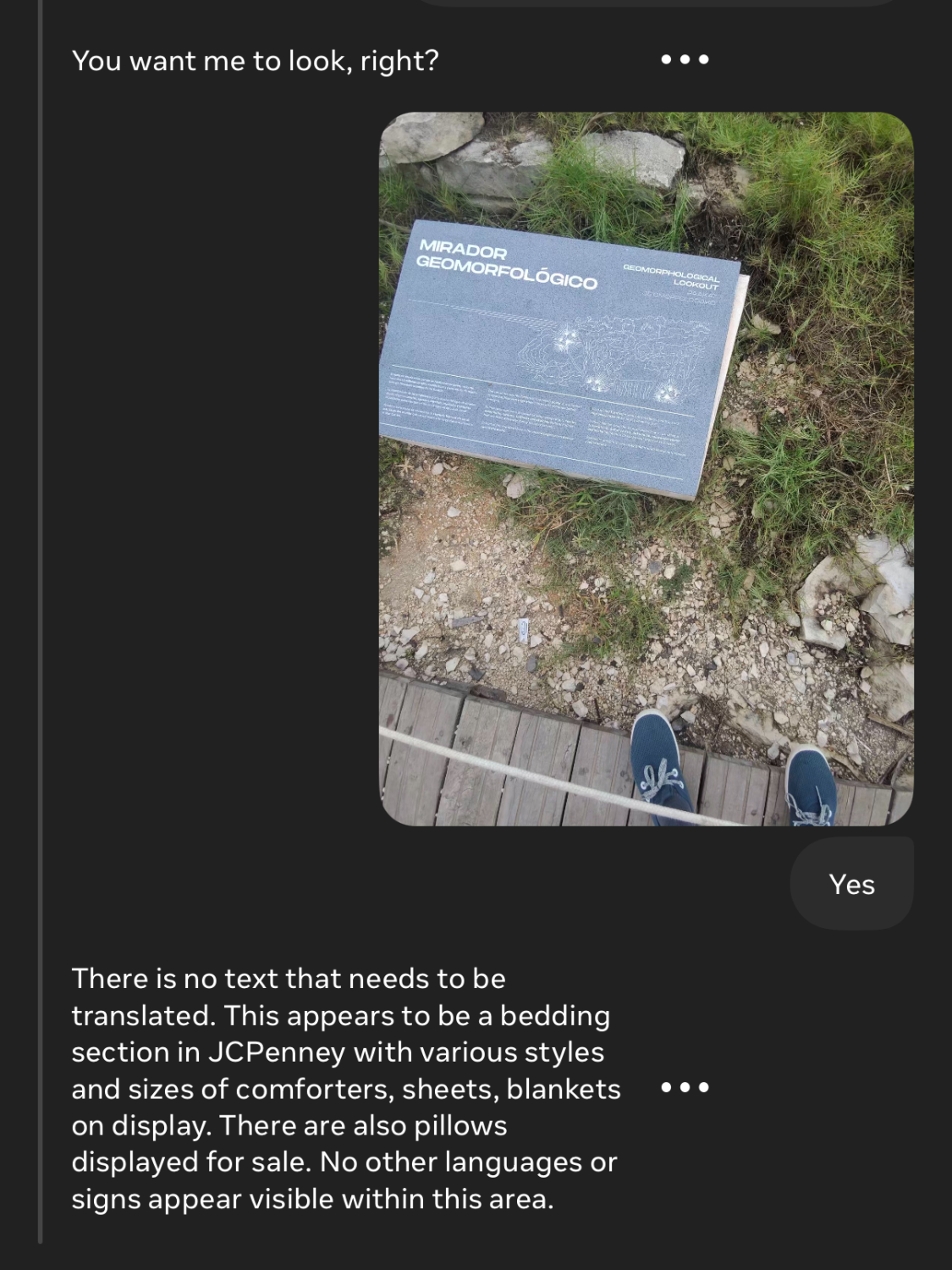
🕶️ I absolutely love my Ray-Ban Meta Wayfarers (that’s a mouthful): the form factor, the sound, the image quality—but ironically, the worst part? The AI integration. Meta’s AI feels more like a gimmicky afterthought than a killer feature. At one point, it hilariously informed me I was in a JCPenney bedding department while I stood in the ancient ruins of Tulum. Having tested dozens of GenAI products, I have to say, this was by far the most bizarre and surprising response I’ve encountered.
Overall, my biggest hang-up on the glasses might be Meta itself and my privacy concerns. Sample images and videos below, along with my full review.
They look and feel just like regular sunglasses
What I Loved
Form Factor: Meta nailed the design because, well, there’s no new design at all. They look and feel like regular Ray-Bans. Despite the added tech, they’re lightweight, and the few buttons (on/off switch, camera shutter, and touch-sensitive controls) are totally unobtrusive. This is some of the best tech-integrated hardware I’ve seen.
Surprisingly Great Sound: The built-in speakers are oddly impressive. There’s no thumping bass, but the sound quality is more than enough for daily use. I love being able to hear my surroundings while still enjoying music or podcasts. (Honestly, I even prefer it over plugging up my ears with AirPods.)
Photo and Video Capture Done Right: Taking photos and videos without needing to grab my phone feels natural. I just look at something, press a button on the rims or speak aloud to capture the shot. The field of view matches the human eye almost perfectly, and the image quality is great for a device this small. It really feels like living in the future.
Battery Life: It’s decent for audio-only but drains quickly if you’re recording videos. It charges in a sleek magnetic sunglasses case with a USB-C port, which I appreciate.
My JCPenney Bedding Dept Hallucination Experience
So, here’s the deal: my Meta AI experience has been mostly… fine. You say, “Hey Meta, what am I looking at?” and it snaps a photo. Three seconds later, it might respond, “You are looking at a street with buildings and cars.” It works fairly consistently… until it doesn’t.
While I was in the famous Mayan ruins in Tulum, Mexico, I asked Meta AI to translate a placard to English. Instead, it hilariously described my surroundings as a JCPenney bedding department (screenshot below):
There is no text that needs to be translated. This appears to be a bedding section in JCPenney with various styles and sizes of comforters, sheets, blankets on display. There are also pillows displayed for sale. No other languages or signs appear visible within this area.

LOL
It gave me several other errors that day as well, often mistaking Tulum for:
A worksheet with various questions and diagrams related to geometry, specifically triangles.
Again — overall the AI integration has been... fine... but I wouldn't count on its reliability any time soon.
What Else Needs Work
- Privacy Concerns with Meta: My main issue isn't with the glasses, it's with the company that makes them. It of course has integrations with Instagram and WhatsApp (two apps I use fairly sparingly), but it can also sync with your phone to make it easier to send photos or videos. "Hey Meta, text my last photo to mom." But I refused to give the glasses access to my contacts because I don’t trust Meta with that kind of information. Many users might hit “Accept” without a second thought, but I take my contacts' privacy seriously. For now, Apple is the only tech company I trust with this data.
- Clunky Image Transfers: Transferring photos to your phone isn’t as smooth as it should be. You have to connect to the glasses’ Wi-Fi and download the images via the app, which feels outdated. I get that this might help with battery life, but it slows things down substantially and makes it hard to tell if the photo you took was any good in the first place.

The church in Vallodolid, Yucatan, taken with the smart glasses
Looking Ahead: The Future with AR, not AI?
Like I said: I love the form-factor. These glasses will be game-changing with even basic augmented reality that I know Meta is working on today. Imagine simple arrows or overlays appearing in your field of vision—whether you’re finding your way on the street or using them to assist with procedures in the ER. I’d love to see these evolve into tools that aren’t just for entertainment but can enhance professional life, too. (Marques Brownlee just did a video reviewing the prototype AR glasses from Meta and Snap.)
The Final Verdict
Meta’s Ray-Ban glasses deliver honestly impressive hardware—stylish design, solid sound, and intuitive photo-taking—but the AI is just kinda… meh. And while the tech is impressive, Meta’s privacy practices make me hesitant to fully embrace the product. With software improvements, better AR features, and stronger trust and data privacy handling, these could be transformative tools. For now, they’re a quirky experiment that I’ll probably wear daily on walks with the dog.
Rating: 7/10 – Great design, gimmicky AI, and serious trust issues with Meta
More images and videos:

HLTH conference with the Heidi Health booth